Posts

A memory of Cynthia

Image
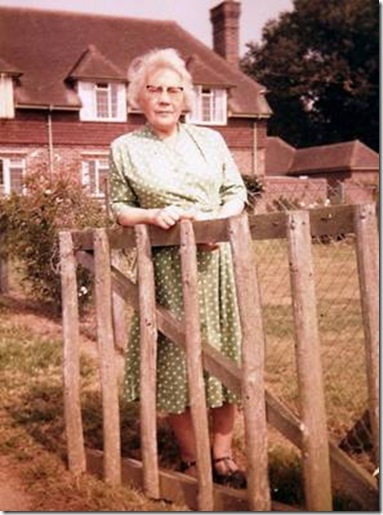
Cynthia died on 22nd April 2019, an Easter Bank Holiday Monday.  She passed away peacefully in bed at her home in South View with her poor arthritic hands rested gently on her diaphragm like a dormouse that had gone to sleep lying on its back.  She was very white and still after all the previous days of pain and struggle. Outside her window the morello cherry flowers were at their snowy best and the camellias were thick with pink and red blossoms in the garden that she loved.  In the wood beyond the bank where the soft shield-fern grows the bluebells had produced their annual magic under the great oak to which she had a swing fixed when she was a child.  I once wrote to her from Alice Springs that one of the things I missed most was "the translucent green of the bluebell woods in spring".  How often she quoted that phrase back to me.  But now, after 62 years together, she is gone and will rest in the Precious Field part of Sedlescombe churchyard among the...

Belgium

Near Dronkaard in the province of Vlaams-Brabant, Flanders, four business men in a Rover car swept through the border into Belgium. The Flanders Fields flashed by the autosnelweg to Ghent and the language of road signs was Flemish.   But maybe there never was a road to Ghent though the night train could have sped into Li è ge south west of Aachen. Brussels, the Grand Place soot encrusted buildings with pale boned facades like well-drilled guillemots on a cliff, a chiaroscuro of filigreed stone seen through the November rain of an Émile Verhaeren poem from the shop of a celebrated chocolatier.   For all the grandeur a small dark fondant is the heart’s desire. Such overpowering experience make it hard to plan an agenda for a day when I can watch green fig leaves trembling as the raindrops fall on them. Moules aux chicons at La Villette red and white checked tablecloths someone said Belgians were both apes and molluscs mussel shells like ...

Thorntonesque

In August 2018 I wrote this sonnet for my friend David Thornton who had been publishing his poems (which I described as 'Thorntonesque') on line.  He asked me what Thorntonesque meant. That style of wordplay known as Thorntonesque Is like a fresh caught smiling arabesque, Neat verses wrote to catch the reader's eye Lifting flagging souls from low to high With unexpected puns and metaphors Laughing at all those tiresome literary laws Displayed in style on blue computer screens Where cyberspace transmits thorntonic scenes That sing the spirit of the Isle of Wight From Bembridge to The Needles shining bright. This bird of words will soon fly to a city, Bold Sheffield craving its own pretty ditty What then? Maybe an opera of rhymes With wicked thoughts for these distracted times.

Trade, 28 August 2018

I found on my tongue a fragment of yellow oat straw from my morning biscuit. What are we going to trade?  Bombs for oranges? Tanks for redbush tea? Such stray thoughts pierced my mind like tariff free polished poison arrows.

Lines from Sedlescombe

To the east a leafing oak glows pale yellow in the April sunshine, Caught in relief against a dark grey cloud With two windflung crows sailing above the tree. A week of frost has gone: a whirl of sleety rain keeps me indoors. Can I write backwards?  Rewilding the present? I went to Columbine Path to photograph the fragility of Prunus subhirtella autumnalis, the 'autumn' flowering cherry, jugatsu-zakura, that has suckered out of a nearby garden.  Unphased by frost and lovely with its long trails of branches blossomed with a dainty snow of flowers. On Tuesday the first wood anemones marked the ground with stray white buttons Great tits zipping in the trees defied one another and a buzzard complained high above Hurst House. Honeysuckle leaves mined to total whiteness, ash trees spotted like snakes with liverwort and lichen. Bluebells making green lawns of leaves under the hornbeams in Killingan Wood. Afterwards I fell over while washing mud off my boots. A slow totter ...

Mushrooms Philippe

One of my favourite recipes is Mushrooms Philippe which I found many years ago in the book Salads (1972) from the Cordon Bleu Cookery Course. Unfortunately I mislaid the book and, having refound it, I have posted the recipe here because, unusually, I was unable to find it anywhere else on the Web, nor did appeals via Twitter etc. produce any results.  There was a reference to the dish on a site about retro foods, but the link was decidedly dodgy and only directed me to a roulette site. So, lest it should get lost again, here it is: Mushrooms Philippe 4-6 oz button mushrooms 1 large tablespoon olive oil 1 shallot (finely chopped) 1 wineglass red wine 1 teaspoon freshly chopped thyme 1-2 tablespoons French dressing (preferably made with red wine vinegar) salt and pepper Method Wash and trim mushrooms (cut off stalks level with caps, slice stalks lengthways and put with mushroom caps). Heat oil in a small frying pan. put in the mushrooms and the shallot.  Fry bri...

Smog

Today was the sixtieth anniversary of one of the defining smogs of London. It started on 5 th December 1952 and continued for four days, bringing death it is said to some 4,000 people. A ‘smog’, for those unfamiliar with the word, is a combination of smoke and fog that, in urban areas, can reduce visibility almost to nothing while being very bad for the lungs due to the chemicals trapped in the water vapour. They were known in London as ‘pea soupers’, reflecting the vaguely greenish yellow colour of the smoke-filled vapour. At the time of the ’52 smog we were living at Bush Barn Farm in Robertsbridge and, as I would have been 14, I must have been at Lancing College. However, I remembered earlier smogs when we were still at the Green Walk in Chingford, north London, particularly one occasion when I walked with my father into a murky, after dark Ridgeway as far as the bus stop, unable to see more than a few feet in front of us Cities, of course, burnt a vast amount of coal. On journeys ...

Red currants

Image
We had several large slices of cold roast lamb which I wanted to use for shepherd’s pie. Rather than the traditional sweet/sharp enhancements like tomato, wine or Worcestershire sauce I decided to add some red currant juice. I found a plastic box of red currants on the fruit shelves of Sainsburys supermarket in St. Leonards. Round, red, translucent pearls with shining skins each with a small withered crown of calyx leaves at their south pole. Each fruit was attached by a short stalk to a central string that had once hung enticingly from a branch of a carefully tended bush. One of my long-held ambitions has been to grow a plant as a cordon on a shady north wall where the fruit can ripen slowly protected by some sort of cover from marauding birds. For my shepherd’s pie I took about one third of the currants and squashed the juice out into my meat and vegetable mix by squeezing and scraping them through a fine mesh steel sieve with a metal spoon. The following day I used the rest of the f...

Hastings (East Sussex) street art

Image
I am finding an increasing number of art manifestations around Hastings, perhaps following the St. Leonards mural by Banksy on a wall below the promenade. First there was this little bird on a great splash of white paint looking as though it was leaping from a nest formed by an ivy-leaved toadflax plant in Waterworks Road. Then I found this strange creature chalked on the pavement in Mann Street.  Is it a monster or a millipede or a fish bone?  Thirdly I came across this cluster of pink blackberries just outside the pedestrian tunnel leading from Bethune Way to the Queens Road area.  They have been carefully spray painted so that none of the colour appears on nearby stems and leaves - a charming and ephemeral manifestation.  Googling 'pink blackberries' produces, of course, endless web sites on Blackberry smartphones and little else.

A memoir for Alice Holroyd

Image
On Friday, 15 th June, our granddaughter Samantha was looking through some store boxes for documents my wife was after, when she came across and old photograph, loose, by itself. It was of Alice Holroyd, the unmarried sister of my maternal grandmother Emily Butler and therefore my great aunt and our children’s great great aunt. She was born, I think, in the Bethnal Green area of London, though the surname has a Yorkshire origin and there was still some recollection of these northern roots when I was a child. One claim was that the family had a blood link to George Stephenson, the Northumbrian engineer who made the first public railway in the world to use steam locomotives, a line inaugurated in 1825. Alice Holroyd, Auntie Alice as I knew her, spent her working life as a primary school teacher in West Ham, East London having trained at Goldsmiths College in Lewisham. She often used to visit us at 5 The Green Walk in North Chingford on the north eastern outskirts of London. This was...

Gogoling

Reading Nikolai Gogol's novel Dead Souls , I came across this well-known passage: Once, long ago, in the years of my youth, in those beautiful years that rolled so swiftly, I was full of joy, charmed when I arrived for the first time in an unknown place; it might be a farm, a poor little district town, a large village, a small settlement: my eager, childish eyes always found there many interesting objects. Every building, everything that showed an individual touch, enchanted my mind, and left a vivid impression.   The author then goes on to describe such a village in great detail. I had to take our daughter to the dentist in the nearby town of Battle today and, waiting for her return and inspired by Gogol I wrote the following: Battle.  Mount Street car park . The whole area was dry, in the depths of a March drought and the sunlight had a peculiar, unseasonal intensity.  It made strong contrasts on the walls of the 1990s sheltered homes with their mixture of rufous and...

In the distance

In the distance I can often see mountain ranges The landscape of the future Unlike the now and the past it is not greenish brown But pale, translucent mauves and pinks Like a shoal of frozen crystalline jellyfish

On open letters

I read books - lots of them.  Often I think I should write to the authors about some of the things they say, or about areas of my own experience that seem to run parallel or counter to theirs.  I normally don't do so because I think these authors will be far to busy to bother with my meanderings.  Also I have twice written to authors only to be advised that they had recently died. So, my plan now is to put open letters, if I think I have something worth saying, into one another of my blogs rather than write to authors direct.  If I include the name of the writer and the name of the book and its topic there may be some faint hope that they will pick up my comments and respond as might others who know them or have read their work.  I don't like to flatter myself with the thought that my views will be available for anyone with access to the Internet to see, but they will.

The nightmare plant

Image
For many years we have had a plant of sacred bamboo Nandina domestica growing by the wall outside our back door. In Japan, if you have a nightmare, the custom is to go and tell the sacred bamboo plant so that it will take away any residual difficulties from the dream.  Perhaps that is why this plant has strangely anguished-looking foliage.

Psychogeog round Bevendean,Brighton, UK

Image
Yesterday in the August rain Jeremy Linden and I went to Meadowview in Bevendean on the eastern outskirts of the city of Brighton and, starting from map ref TQ33220608, we walked eastwards along a corridor of the Bevendean Down Local Nature Reserve (below) to the Race Hill footpath. Here we turned south and then up the hill past the race horses to the summit with its magnificent views across Brighton and the racecourse to the sea.  Close to the top of Race Hill on an unmade cul-de-sac is an isolated row of terrace houses called Bellevue Cottages built in the mid- to late 19th century. On the side wall of the blue cottage the owner had painted some impressive zodiacal devices.   After Bellevue we made the long trek down Bear Road with the cemetery wall on the right and open fields on the left, but much traffic in between.  At Bevendean Road we turned north and explored the Tenantry Estate - all new houses and turfed grassland built on the former Bevendean Hospital a...

Stinging nettles through faded curtains

Image
The strong July sun falls from the east on to our large room curtains silhouetting the nettles in the border outside.  The curtains are faded now and torn or threadbare in places, but they do. The garden is unkempt but some like it that way, especially the stinging nettles.  All I have time for now is to keep a path open to the far end and back by a different route. There are many compensations like this out-of-focus pattern on the old fabric which moves gently as the breeze catches the nettle plants. Winter will take the plants away and leave just the worn material and the memory of sunshine.

A trip to Derbyshire

Image
On 17 May 2010 (our son's 35 birthday), I found myself at Chesterfield station in Derbyshire with a little time of my hands. To my surprise I discovered a statue of George Stephenson (supposedly one of our distant relatives) of Rocket fame outside the station entrance. Stephenson died in Chesterfield and is buried in the nearby churchyard at the church with its famous crooked spire. The bronze statue was erected in in 2005 to mark the opening of the new station entrance hall with a man who was so instrumental in the establishment of travel by train. I wandered psychogeographically round the precincts of the station entrance admiring the solid red brick architecture. And the intricacy of the view up Corporation Street from Crow Lane. I also enjoyed the sight and sweetly pungent smell of a flowering dwarf broom hedge (possibly Cytisus x praecox 'Allgold'). Soon though I was speeding through the Derbyshire Dales countryside at its late spring best en rout...

On a Richard Dawkins review

In the Times Literary Supplement for 11 February 2009, Richard Dawkins reviews a book by Professor Jerry Coyne called Why evolution is true published by Oxford University Press.  Dawkins is sufficiently persuasive to have induced me to order a copy, so I might dare to say a bit more after I have read it. While I have been happy since childhood to believe, alongside Professor Coyne, that evolution is true, I often feel that the leaders in the field are suggesting that nothing about the mechanisms of evolution remain unresolved.  It is encouraging therefore to read in a paper by Antónia Monteiro and Ondrej Podlaha (2010) from the Department of Ecology and Evolutionary Biology, Yale University "There is still much to do in order to fully understand how novel complex traits evolve. ....  it is important to continue exploring the full complement of genes that are shared across multiple traits to identify gene clusters that may be behaving as an integrated and context-insensit...

Rural psychogeography

I was recently introduced, by my son Charles, to the realm of psychogeography, something I really should have known about as it has been going on for years and, according to some, has almost exhausted its possibilities.  Usually though it is to do with urban wandering, so the rural dimension is, perhaps, a rare variant. However, urban or rural, it is new and interesting to me.  I won't try and define what it is because it is easy to look up on the Internet, but I have appended below one of many examples of the genre penned by myself without knowing what I was doing. Solvitur ambulando , it is solved by walking, a Latin phrase normally attributed to St Augustine of Hippo.  But quite what is solved by walking I am not sure, though it sounds good. Anyway, here is my rural psychogeographic text (from 2001): 8 July 2001 (A walk from Coleford in the Forest of Dean where I was staying for a couple of days with David and Vicki Thornton. I got up early one Sunday morning and, ...

How have I got into evolution anyway?

How have I got into evolution anyway?  It goes a long way back.  From early childhood I was deeply interested in wildlife and when I was 8 or 9, towards the end of World War II, my mother bought me a book called The Story of Living Things and their Evolution , written and illustrated by Eileen Mayo (1944) who was not a professional biologist. I was enthralled by this book and, turning the pages today, I can remember the pleasure each picture and the accompanying text gave me. The book was scientifically blessed with an introduction by Julian Huxley.  This contains some astonishing remarks.  For example, Huxley writes that Darwin and others "finally dethroned man from his claim to a unique position of Lord of Creation."  (I though that was God!).  Then Huxley rather contradicts himself in the next paragraph by saying that "as a result of studying evolution, we now know not merely that man has evolved from lower animals, but that he is now the sole trustee ...